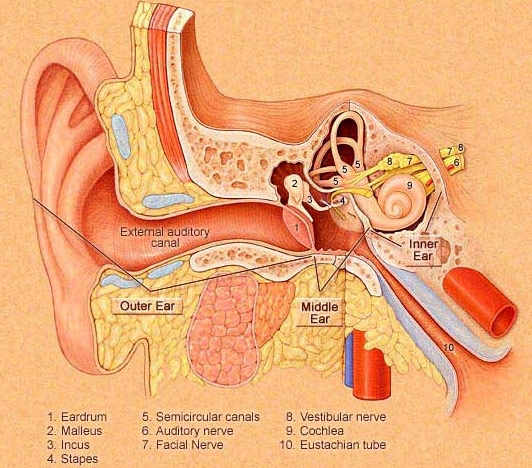
How the ear works
- The middle ear is connected to the nose by the passage called the Eustachian tube
- The Eustachian tube does two things:
- It helps to maintain an equal pressure inside and outside the middle ear, which allows the eardrum to work effectively
- It allows the fluid from the middle ear to drain away to the nose
- The passage opens to allow the pressure to equalise in the middle ear space – this causes the click or popping noise which you can hear as the tube opens
- Ear infections are common in children because of Eustachian tube blockage
- In children the Eustachian tube is narrow and is easily blocked – which can lead to ear infection
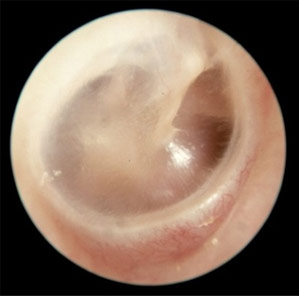
Ear infections in children
- Ear infections are very common in children
- One out of every three primary school age children will have some form of middle ear condition – often with reduced hearing
- Infection of the middle ear is the most common cause of temporary hearing loss in children
- Middle ear infection is also known as otitis media or glue ear
- Ear infections in children may be short term (acute ear infection) – or a longer term problem (chronic ear infection)
What causes middle ear infections?
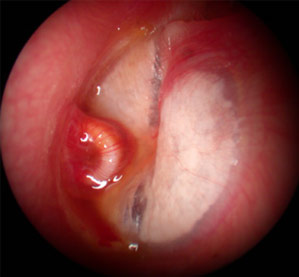
- If the Eustachian tube is not working properly or is blocked the pressure in the middle ear drops – this causes fluid to collect in the middle ear and the ear drum to draw in (ear drum retraction)
- Over time the fluid becomes thicker – leading to the name ‘glue ear’’
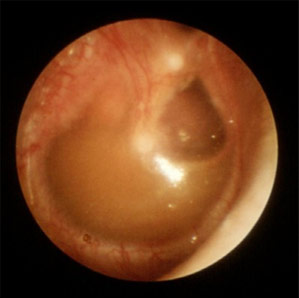
The effect of glue ear on hearing
- When the middle ear does not work well, the structures in the ear become blocked and less able to carry sound to the inner ear
- This is called conductive hearing loss because the sound is prevented from being properly conducted through the middle ear to the inner ear and nerve of hearing
- Middle ear infection causes a partial hearing loss and if treated quickly and successfully, the hearing nearly always returns to normal or near normal
Treatment of a middle ear infection
- In the early stages a conservative approach might be effective, with an antibiotic and nasal decongestant
- When the ear infection is long-standing or recurrent, then a surgical procedure may be needed to place an ear tube (grommet) to re-ventilate the middle ear space
What is an ear grommet?
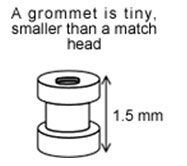
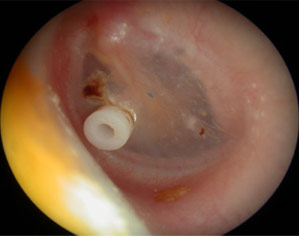
- A grommet is a tiny Teflon tube placed across the ear drum to allow air to enter the middle ear
- The grommet does the work of the Eustachian tube – giving the middle ear a chance to recover and work properly
- Grommets are placed as a day surgery procedure and cause no discomfort
Ear care for a child with grommets
- Fluid may drain from the ear following insertion of grommets
- Water precautions may be needed – if the water is clean there are usually no problems
- Jumping and diving into water is best avoided unless earplugs and a swim cap are worn
- Usually the presence of grommets causes no pain and ear pain is one of the first signs of infection – another sign of infection is drainage from the ear
- If this occurs concerns you should visit your local doctor who will contact your surgeon
- Begin Ciloxan ear drops – 3 drops / 2 times a day and arrange to see your ENT specialist for an ear check
- Do not use cotton buds to clean the ear canal or remove wax